Afrika'da yapılacak olan mescide bir tuğlada sen koy
From the Pen of Nuray Canan Songur
Sometimes, a person reveals where they truly stand not through grand statements, but through the smallest choices they make.
A product we pick up at the supermarket…
A cup of coffee we drink…
A brand we have grown accustomed to buying…
It is easy to say, “What difference will my purchase make?”
But I cannot look at it that way.
Because we have seen Gaza.
We have seen the fear in children’s eyes. We have seen the helplessness of mothers. We have seen destroyed homes and lives left unfinished.
And once you have seen these things, you can no longer live as though nothing has happened.
My greatest fear is this:
Becoming accustomed to Gaza.
Becoming accustomed to suffering…
Becoming accustomed to death…
Becoming accustomed to watching a child’s tears as though they were just another news story…
Because one of the greatest victories of oppression is when people stop being shocked by it.
That is why we must not forget Gaza.
Not today.
Not tomorrow.
Not when the news cycle changes.
Not when television channels move on to other stories.
Not when Gaza appears less often on social media.
Because the suffering of the oppressed does not begin and end according to our agenda.
The Qur’an gives us this powerful warning:
“Do not incline toward those who do wrong, lest the Fire touch you…”
(Hud, 11:113)
Bediuzzaman Said Nursi expresses this truth in a striking sentence:
“Consent to oppression is oppression; whoever supports the oppressor becomes an oppressor.”
This is where my understanding of boycott begins.
For me, boycott is not an angry reaction.
Above all, boycott is awareness.
A person should care about where their money goes.
They should know who benefits from their spending.
When making a purchase, we should not look only at the price tag; we should also listen to our conscience.
Of course, we must never accuse people, companies or institutions based on rumours or unverified claims. We should research carefully, rely on trustworthy sources, and avoid circulating lists that have no solid evidence behind them.
But once the facts are known, shaping our consumption according to our conscience should never be dismissed as meaningless.
This is where the true meaning of boycott begins:
Do not consume without thinking.
Do not buy everything placed in front of you without asking questions.
Understand that your money is also a form of choice.
There is another truth we must face.
If boycott becomes nothing more than a few days of anger, it loses its meaning.
If we post a few messages on social media after a tragedy and then return to our old habits a few weeks later, then real awareness has not been formed.
What matters is consistency.
Because awareness does not mean remembering only when emotions are high.
Awareness means remembering even when forgetting becomes easy.
That is why I believe the sensitivity we have developed toward Gaza must last longer than temporary outrage.
We should know why we make the choices we make.
We should explain them to our children.
When they ask us, “Why are we not buying this?” we should be able to give them a meaningful answer.
Because we must teach our children not only what to buy, but also why they buy it.
Gaza is not a social media trend.
It is not a headline to be discussed today and forgotten tomorrow.
A child’s suffering has no “trending period.”
A mother’s tears have no expiration date.
People in Gaza continue to live with profound humanitarian needs.
That is why our memory must remain alive.
We should not think that our responsibility ends because we donated once.
We should not believe that one social media post is enough.
Praying, donating, sharing reliable information, supporting humanitarian relief efforts and reconsidering our consumption choices…
Each of these is a way of showing concern within our own means.
Allah says in the Qur’an:
“Cooperate with one another in goodness and righteousness, and do not cooperate in sin and transgression.”
(Al-Ma’idah, 5:2)
When we read this verse, perhaps we should also ask ourselves:
Where is my money going? What am I helping to strengthen through my choices?
Perhaps this is one of the most dangerous sentences because it keeps people from acting:
“What difference can I make on my own?”
Yes, none of us can end every injustice in the world by ourselves.
None of us can stop a war alone.
But we can decide what our own conscience will accept.
We can question our own spending.
We can help a child.
We can provide a meal for a family.
We can pray for those who are suffering.
We can speak so that Gaza is not forgotten.
Things that appear small are no longer small when millions of people act with the same awareness.
I do not see boycott as nothing more than a list of brands.
The real issue is creating a culture of conscience.
A Muslim should think before consuming.
Think before spending.
Think before wasting.
Think about the condition of people suffering elsewhere in the world.
Because the Qur’an tells us:
“The believers are but brothers.”
(Al-Hujurat, 49:10)
Brotherhood is not simply sitting at the same table.
Sometimes it means feeling the pain of a child you have never met as though that child were your own.
Sometimes it means allowing the tears of a mother thousands of kilometres away to disturb your comfort.
And sometimes it means genuinely asking:
“What can I do?”
One of the most important responsibilities we carry today is not to lose our memory.
We will not forget Gaza.
We will not forget the children.
We will not forget the mothers.
We will not allow the voices of the oppressed to disappear beneath the noise of the world.
But as we do this, we must never abandon justice, truth or fairness.
If we boycott, we should do so based on reliable information.
If we donate, we should make sure our help reaches trustworthy hands.
If we speak, we should speak truthfully.
Because our response should not be only an emotional reaction.
It should also be a matter of morality and conscience.
And at the end of the day, there is one simple question every one of us should ask ourselves:
“While all of this was happening, what did I do?”
Perhaps we cannot change the whole world.
But we can change our own choices.
We can create awareness in our own homes.
We can teach our children compassion and conscience.
And we can refuse to forget Gaza.
Because sometimes, simply refusing to forget is itself a stand.
Nuray Canan Songur
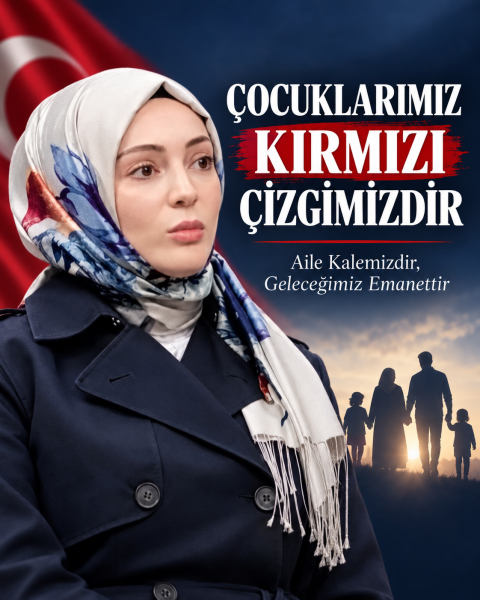
Aile kalemizdir. Çocuklarımız ise kırmızı çizgimizdir. Avrupa Bize Aile ve İnsanlık Dersi Vermesin Bir toplumun geleceğini ele geçirmek istiyorsanız önce ordularına değil, çocuklarının zihinlerine ulaşırsınız. Çünkü çocuk değişirse aile değişir. Aile değişirse toplum değişir. Toplum hafızasını kaybederse bir süre sonra kendi değerlerine yabancılaşır. Bugün Türkiye'de yaşanan tartışmaya tam da buradan bakmak gerekiyor. Mesele herhangi bir yetişkinin özel hayatını takip etmek değildir. Mesele çocuktur.
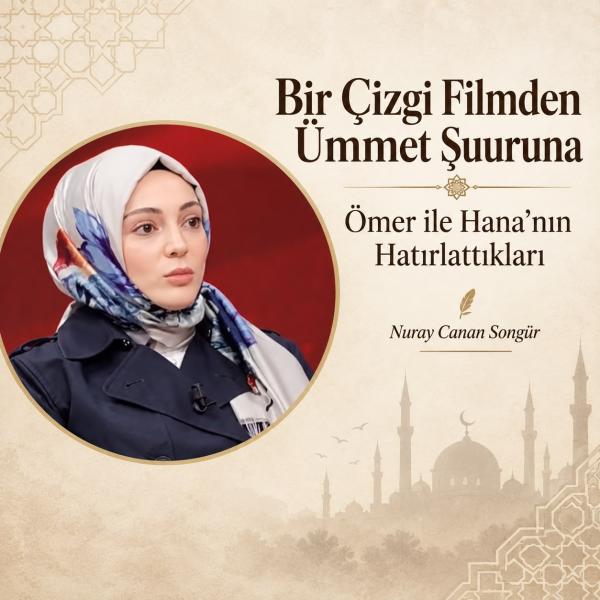
BİR ÇİZGİ FİLMDEN ÜMMET ŞUURUNA: ÖMER İLE HANA’NIN HATIRLATTIKLARI Geçenlerde çocuklar için hazırlanmış bir çizgi filme denk geldim. Adı Omar & Hana, yani Ömer ile Hana… İlk başta birkaç dakikalık, çocuklara İslam’ı ve güzel ahlakı anlatan sevimli bir çizgi film olduğunu düşündüm. Fakat birkaç bölüm izledikten sonra şunu fark ettim: Bu çizgi film çocuklara sadece dua etmeyi, selam vermeyi veya güzel davranışları öğretmiyordu. Çocuklara bir kimlik anlatıyordu. Bir aidiyet anlatıyordu. Ve belki de bugün biz yetişkinlerin dahi yeniden hatırlamaya ihtiyaç duyduğu o büyük kavramı anlatıyordu: Ümmet olmayı…
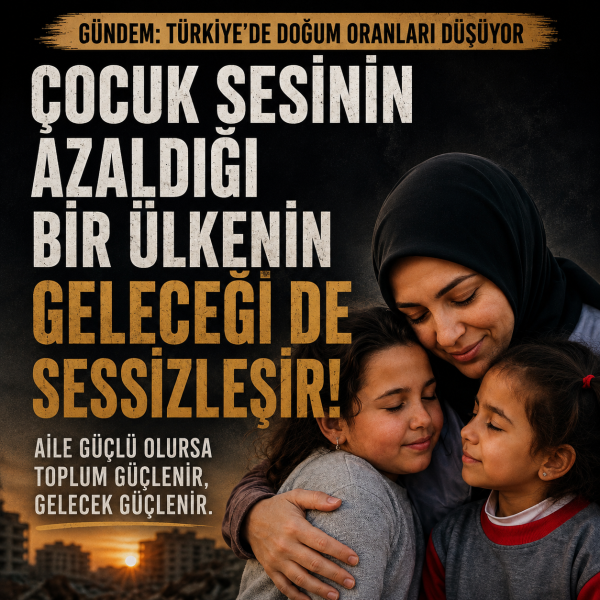
Çocuk Sesinin Azaldığı Bir Ülkenin Geleceği de Sessizleşir Nuray Canan Songür Bir milletin geleceğini anlamak istiyorsanız yalnızca fabrikalarına, yollarına, binalarına bakmayın. Evlerine bakın. O evlerde kaç çocuk gülüyor, kaç anne geleceğe güvenle bakıyor, kaç genç “Ben de bir yuva kuracağım” diyebiliyor? Bugün Türkiye’nin önünde sessizce büyüyen çok ciddi bir mesele var: Aile küçülüyor, çocuk sayımız azalıyor. TÜİK verilerine göre toplam doğurganlık hızımız 2025 yılında 1,42
